The short answer
What moves a used car's price?
Six things do most of the work. Two cars with the same badge can be thousands apart because of them.
| Factor | Pushes the price up | Pulls the price down |
|---|---|---|
| Kilometres | Low for its age | High for its age |
| Variant and spec | Higher trim, factory options | Base model sold as a higher one |
| History | Full service records, NZ-new or clean import record | Gaps, unknown history, past damage |
| Condition | Tidy inside and out, good tyres | Worn tyres, warning lights, rust |
| Paperwork | Fresh WOF, rego current | WOF due, rego lapsed |
| Who's selling | Dealer, with consumer law protection | Private seller, fewer rights |
The last row isn't a rip-off on its own. A dealer price buys you rights under the Consumer Guarantees Act and a signed Consumer Information Notice. A private sale gives you neither.
How to check a car's price, step by step
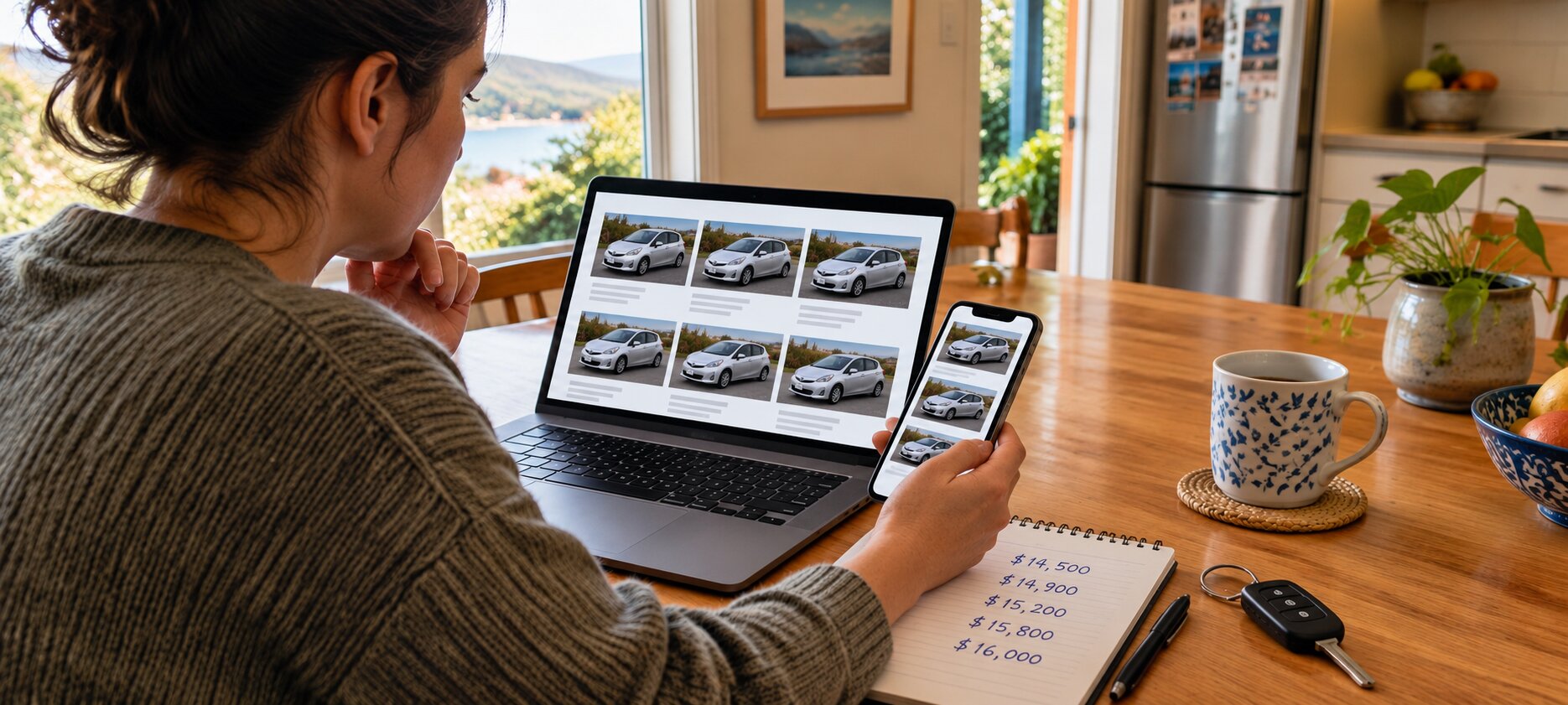
- Get a range. Trade Me's free Value My Car tool builds a price range from dealer and private listings. Enter the plate or the make, model, year and kilometres.
- Find 3 to 5 near-twins. Same model and variant, within a year either way, and similar kilometres. Ignore anything that's been listed for months; it's priced too high to sell.
- Adjust for what you know. A full service history is worth paying for. A missing one is worth asking about, and worth money off.
- Price what's included. Is the WOF fresh? Is the rego current? Are there add-ons like paint protection or mechanical breakdown insurance bundled in? Those change the real number.
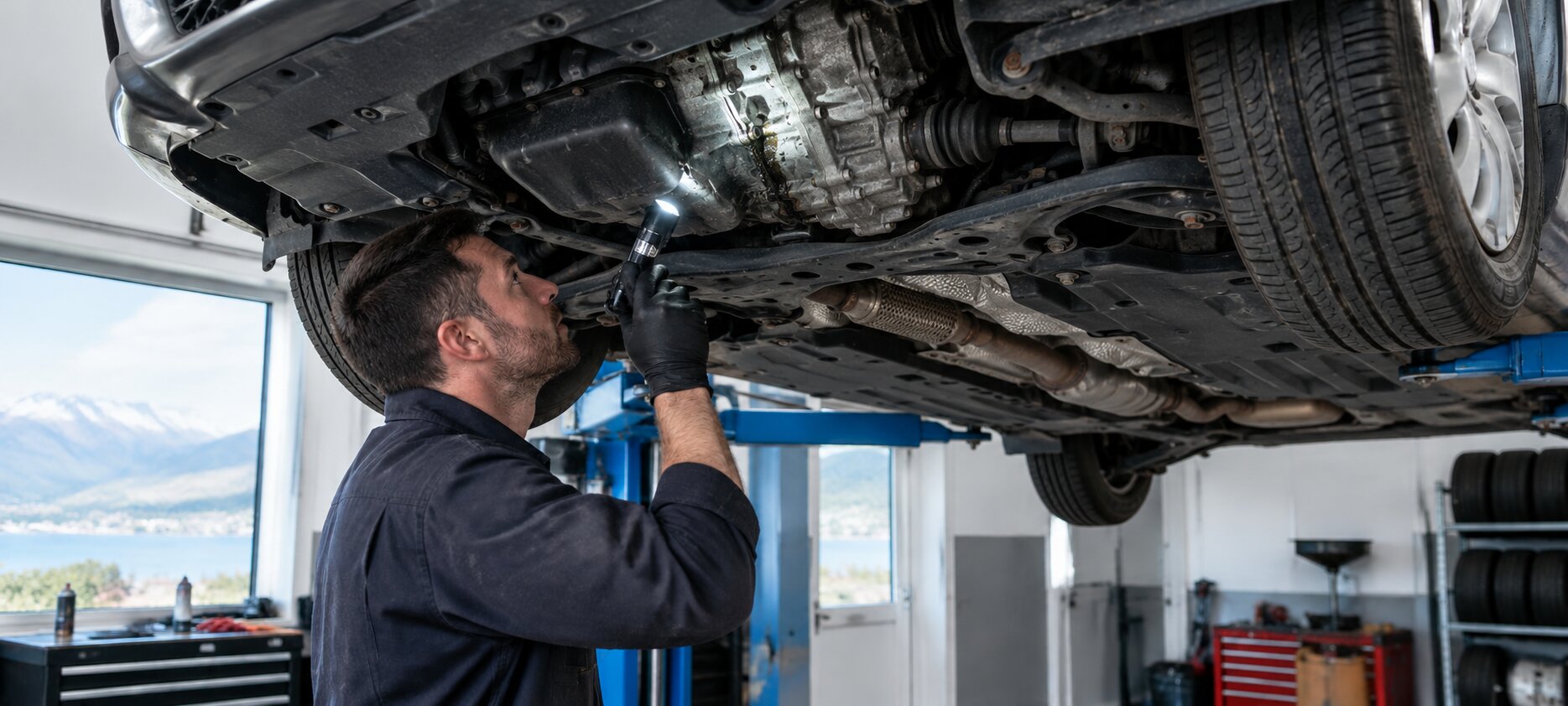
- Get it inspected. A pre-purchase inspection costs far less than the faults it finds. If it turns something up, that's your case for a lower offer.
Is a dealer price higher than a private sale?
Often, and some of that is fair. Registered dealers must comply with the Consumer Guarantees Act and the Fair Trading Act. They must also display an accurate Consumer Information Notice on every used car, covering its history, odometer reading and any money owing.
Private sellers don't have to do any of that. You may pay less, but you're taking on the checks yourself. If something goes wrong, your rights are harder to enforce.
So the question isn't just "which is cheaper". It's whether the gap in price is bigger than the gap in protection.
Signs you're being asked to overpay
- The price sits well above the range with no clear reason, like low kilometres or a higher spec
- Extras you didn't ask for are already in the price
- There's pressure to decide today, or to pay a deposit before an inspection
- The seller won't let an independent mechanic look at it
- The history is vague and the price isn't
“A fair price isn't the lowest one. It's the right number for that exact car, with everything you know about it.”
[Carfinder name], carfinder
Want someone to check the number for you?
Tell us what you're after. A carfinder will come back with 3 cars at a fair price, and show you how we got there. Dealers pay us nothing, so we're on your side of the desk.
How to negotiate a used car price without the awkwardness
Lead with facts, not feelings. "Similar cars with this kilometre reading are listed between $X and $Y" is hard to argue with. So is "the inspection found the front tyres need replacing".
Make your first offer once you've seen everything: the car, the history, the inspection. Leave room to move, and know your walk-away number before you start. There are other cars.
The short version
- Get a price range from a free valuation tool
- Compare 3 to 5 cars with the same variant, year and kilometres
- Adjust for history, condition and what's included
- Weigh a dealer's price against the consumer rights it comes with
- Get an independent inspection before you make an offer
Common questions
How do I know if a used car is worth the price in NZ?
Compare it with near-identical listings and a valuation tool's range. Then adjust for service history, condition and what's included in the price.
Are online car valuations accurate?
They're a good starting range, not a final answer. Most assume average condition and a decent service history, so the real car can be worth more or less.
Do I have consumer rights if I buy privately?
Fewer. Private sales aren't covered by the Consumer Guarantees Act or the Fair Trading Act. You may still have rights if the seller gave you false information or didn't have the right to sell the car.
What's a Consumer Information Notice?
A notice dealers must display on every used car. It covers the car's history, price, condition, odometer reading and any money owing. Private sellers don't need one.
Can a carfinder tell me if a price is fair?
Yes. Pricing cars is a big part of what we do. Every match we send comes with why it made the list, including why the price stacks up.
[Short bio: what they specialise in, and the kind of buyers they help most.]